

Lever Extraction CaffeTech Canada - What Make Lever Machines so Good?

Lever (Leva ) Extraction
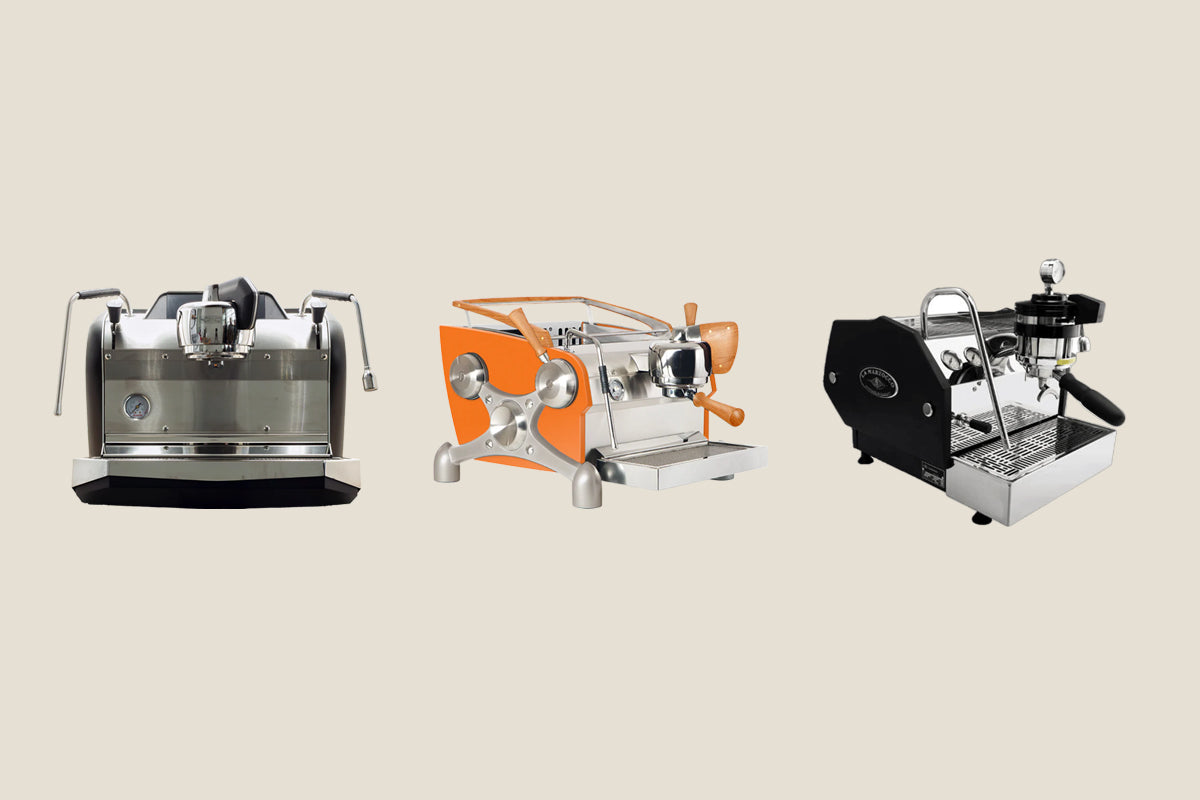
Lever espresso extraction was first pioneered by Achille Gaggia in 1938. This technology enjoyed roughly a 12-year production span across various manufacturers before pump-driven espresso machines were introduced in the 1950s.
Many early lever machines drew brew water directly from the boiler. Later developments, particularly in the 1960s, introduced heat-exchanger systems that allowed fresh water to be used for brewing independently from the primary boiler. The idea that fresher water, with higher oxygen content, produces better espresso has long been discussed, though there is still no conclusive evidence proving that dissolved oxygen alone significantly changes extraction quality.
Despite the rise of pump-driven espresso machines, many regions in southern Italy continued to favour lever extraction. This preference remains rooted in both tradition and performance. Lever machines are mechanically simple, relatively low-maintenance, and produce a distinctive style of espresso associated with a richer body, deeper flavour, softer texture, and often a sweeter cup.
To understand why lever extraction can produce these results, it is important to consider three key elements of espresso extraction: pre-infusion, temperature, and brewing pressure/flow.

Pre-Infusion
On a traditional lever machine, pulling the lever down opens a valve inside the group and allows water from the boiler to enter the brewing chamber. In many commercial lever machines, this water may initially be held at approximately 112°C to 118°C inside the boiler. Some residential lever machines use heat-exchanger systems, where brew water temperatures are generally closer to 95°C, often supported by additional group heating.
This first downward movement of the lever begins the pre-infusion stage. During this period, water contacts the coffee bed before the spring-driven extraction begins. There are different opinions on how long pre-infusion should last. However, at CaffeTech Canada, our philosophy is to keep the pre-infusion stage relatively short, especially when working with higher-temperature boiler water, in order to reduce the risk of over-extraction or harshness.
Once the lever is released, the spring begins applying pressure to the coffee bed, moving the extraction into its main brewing phase. The decisions made during pre-infusion can significantly affect the final flavour of the espresso.
Temperature
Although water may initially enter the lever group from the boiler at 112°C to 118°C, the actual brewing temperature during extraction is typically much closer to 92°C to 96°C. This is due to the large mass of the lever group, the cooling that occurs as water enters the brewing chamber, and the thermal characteristics of the brass group itself.
High-quality lever machines use large, forged brass groups because thermal stability is critical. This same principle is seen in other espresso technologies, such as the E61 group or La Marzocco’s saturated brew group design. Stable temperature is essential to consistent espresso extraction.
Lever groups are unique because the brew water must remain in the brewing chamber for an extended period, often around 38 to 45 seconds, without active pump assistance. During this time, the mass of the group helps maintain an appropriate brewing temperature. The boiler pressure, generally around 1.2 to 1.5 bar, also continues to influence the movement of water through the group.
In summary, lever extraction begins with a higher initial water temperature during pre-infusion, then gradually settles into a more conventional brewing range as the extraction progresses. This declining temperature curve can create an excellent environment for espresso extraction.
Brewing Pressure and Water Flow
Once the spring lever is released, pressure is applied to the water in the brewing chamber, forcing it through the dispersion screen and into the coffee bed. Many traditional lever machines use deeper portafilters, often 53 mm rather than the more common 58 mm size found on pump-driven machines. This deeper basket design allows more space above the coffee bed and supports the distinctive flow and pressure characteristics of lever extraction.
At the beginning of extraction, lever machines can produce relatively high pressure, often in the range of 12 to 13.5 bar. This higher initial pressure, combined with strong water flow, contributes to the heavy body and depth commonly associated with lever espresso.
As the spring decompresses, pressure gradually declines throughout the extraction. At the same time, the water temperature also decreases. This creates a natural pressure and temperature curve: stronger and more forceful at the beginning, then softer and gentler toward the end.
At CaffeTech Canada, we believe this is one of the key reasons lever espresso can produce such a distinctive cup. The early stage of extraction develops depth, body, and intensity, while the later stage, with lower pressure and lower temperature, can produce a sweeter and softer finish. This gradual decline may also help reduce harsh or astringent compounds when the coffee bed is already fully saturated and more vulnerable to over-extraction.
Once the lever returns to its resting position, the infusion valve closes and the remaining water is expelled through the coffee bed. The result is typically a compact, dry puck that can be removed from the portafilter.
Unlike pump-driven machines, where the pump is stopped to end the brew cycle, lever machines require the operator to manage the extraction more actively. For this reason, using a scale is recommended whenever accuracy and consistency are important. This is especially critical in a commercial coffee bar environment, where beverage standards must be repeatable from shot to shot

Advantages of Lever Espresso Machines
- less expensive to maintain
- Less group maintenance
- Better deeper flavour espresso extraction
- PID
Disadvantages of Lever Espresso Machines
- Initial Learning curve on use can be challenging
- Some models do draw water from primary boiler ( see comments above)
PROFITEC PRO 800 LEVER ESPRESSO MACHINE $4699
Profitec Pro 800. True to the quality and engineering standards expected from a German manufacturer, the Pro 800 combines traditional lever extraction with modern reliability and exceptional build quality.
Built around a commercial-sized 58 mm lever brewing group, the Pro 800 features heavy-duty stainless steel construction and a massive 3.5-litre insulated copper boiler, delivering impressive steam capacity and outstanding temperature stability. Water is supplied to the group through a traditional dipper system utilizing natural convection, faithfully preserving the brewing characteristics of classic lever espresso machines.
While the machine incorporates a vibratory pump for automatic boiler filling from either the integrated water reservoir or direct plumbing connection, espresso extraction itself remains entirely spring-lever driven, following the same proven principles that defined the iconic lever machines of the 1940s.
After extensive testing and evaluation, CaffeTech Canada considers the Pro 800 to be one of the most reliable lever espresso machines available today. Its combination of build quality, ease of maintenance, temperature stability, steam performance, and consistently excellent brewing results make it an exceptional value.
For these reasons, the Profitec Pro 800 earns CaffeTech Canada's Top Choice for Lever Espresso Machines in 2026.

SOLID CONSTRUCTION AND CRAFTSMANSHIP:

WELL DESIGNED WORKING AREA:

ACCESSORY KIT

Features:
-
Advanced PID - The PID controller in the Profitec 800 is hidden behind the drip tray. It allows you to adjust the boiler temperature.
-
Professional gauge The Profitec Pro 800 features a professional gauge that indicates pressure in the boiler. It is a great feedback tool which lets you better understand your machine and improve your final results.
-
No Burn Steam & Hot Water Wands:
The machine is equipped with no burn steam and hot water wands that can be manipulated without worrying about scolding your hands. Also, milk doesn't stick to a dual-walled steam wand as much as to a regular. -
Water Sensor:
Level control cuts the power circuit if water is low, with a microprocessor that automatically controls the level of the water tank and boiler. A low water level warning will tell you when you need to refill. Please note: for proper operation, it is a must to use water with mineral content. -
Plumbed in or Pour over:
The Pro 800 can be run as a pour-over machine using the included 3 liter water tank or it can be directly plumbed into your water main. -
Stainless Steel Housing:
The Profitec Pro 800 is housed in a highly durable and very beautiful AISI 304 stainless steel case.
Bezzera Strega TOP Leva Espresso Machine $3995
Coming in at number two on our list is the Bezzera Strega TOP, a machine that shares many characteristics with the Profitec Pro 800 while taking a slightly different approach to lever extraction.
Unlike traditional dipper-style lever machines that rely on natural convection to fill the brewing chamber, the Strega utilizes a vibratory pump to charge the piston chamber in preparation for extraction. This design provides convenience and flexibility while maintaining the distinctive pressure profile that lever enthusiasts appreciate.
The Strega is equipped with a 2.0-litre copper boiler, which is smaller than that found in the Profitec Pro 800. As a result, steam capacity is somewhat reduced, although it remains more than adequate for preparing consecutive milk-based beverages in a typical home or light-duty environment.
The machine features both reservoir and direct-plumb operation, offering installation flexibility for a wide range of users. Brewing water is supplied through a heat-exchanger system, which necessitates the use of a heated group design to maintain adequate temperature stability throughout the extended lever extraction cycle.
One area where the Strega differs from a true dipper-style lever machine is during the pre-infusion stage. Because the piston chamber is filled by the pump rather than through a traditional dipper system, there is less direct control over the infusion process. In our experience, this can occasionally lead to a longer or more aggressive pre-infusion cycle, particularly when compared to classic lever designs, increasing the potential for over-extraction if the coffee is not dialed in correctly.
That said, the Bezzera Strega TOP consistently produces exceptional espresso. In many cases, it can extract additional flavour complexity from medium and darker roast profiles while still delivering the sweetness, body, and texture that lever enthusiasts seek. The machine's spring-lever design produces a pressure curve that remains distinctly different from conventional pump-driven espresso machines.
As with all products bearing the Bezzera name, build quality and attention to detail are outstanding. Considering its performance, versatility, and price point, the Bezzera Strega TOP represents an excellent value proposition in a category where high-quality lever espresso machines remain relatively rare.
For those seeking an authentic lever experience with modern conveniences and outstanding Italian craftsmanship, the Strega TOP remains one of the finest options available through CaffeTech Canada.

COMPACT AND WELL DESIGNED:

ERGONOMIC AND STYLISH HANDLES:

STEAM PRESSURE GAUGE CONTROLLED BY MECHANICAL P STAT:

-
Brew Group
The group is heated by an heating element that ensures the group's thermostability. Before coffee delivery the pump fills the lever group providing a pre infusion between coffee and water. During delivery the pump stops, and the pressure in the group unit is developed by two springs that guarantee a steady supply and the best oil extraction from the ground coffee. -
Heat-Exchanging Boiler
The Bezzera Strega is fitted with a 2 liter copper boiler with heat exchanger system. That means you can steam milk and extract espresso at the same time. High 1450-watt heating element is controlled by a thermostat to maintain a constant temperature. -
Vibratory Pump
The Bezzera Strega boasts a powerful vibratory Ulka pump rated at 15 BAR of pressure to extract maximum flavor from the coffee beans. -
Professional Gauge
The Bezzera Stregas' gauge indicates boiler pressure. This is a very handy tool when extracting espresso as it provides a window into the extraction. -
Steam and Hot Water Wands
A multi-directional steam wand has an excellent range of motion for ease of use. It creates fine and creamy milk foam effortlessly for your cappuccino and latte. Hot water wand is also on a ball joint making it easy to pour water into a cup. The tip of the steamer is a 4-hole. -
Joystick Style Knobs
This is the latest trend in the industry. Instead of using taps that have to be turned on and off the Strega features the instant on/instant off Joy Stick style wands. These are also nice because they cannot be over tightened. -
Automatic Water Refill
The boiler of the Bezzera Strega comes with an automatic water-refill feature that allows uninterrupted supply of scrumptious espresso, americano, cappuccino, caffe latte and much more.